
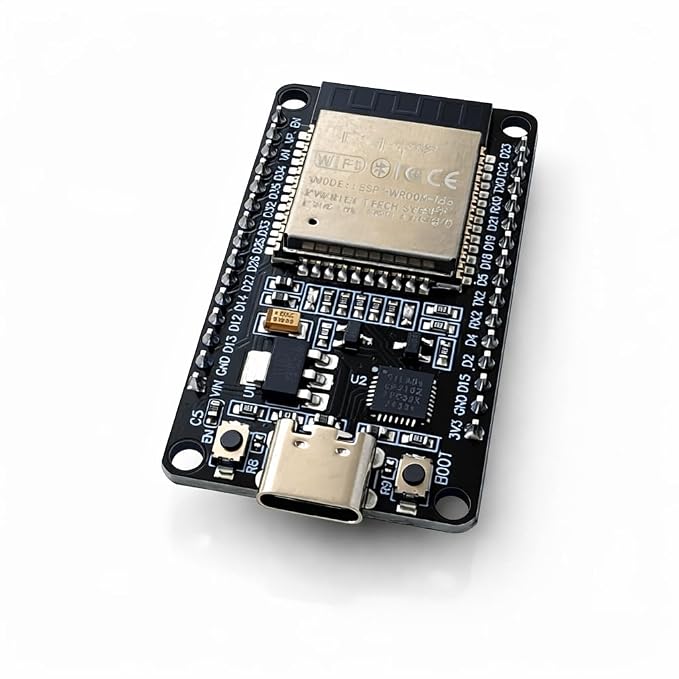
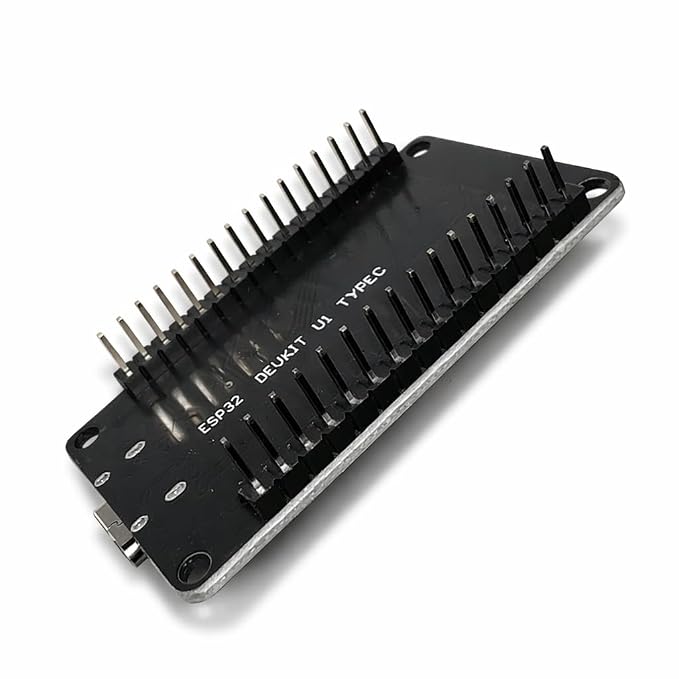
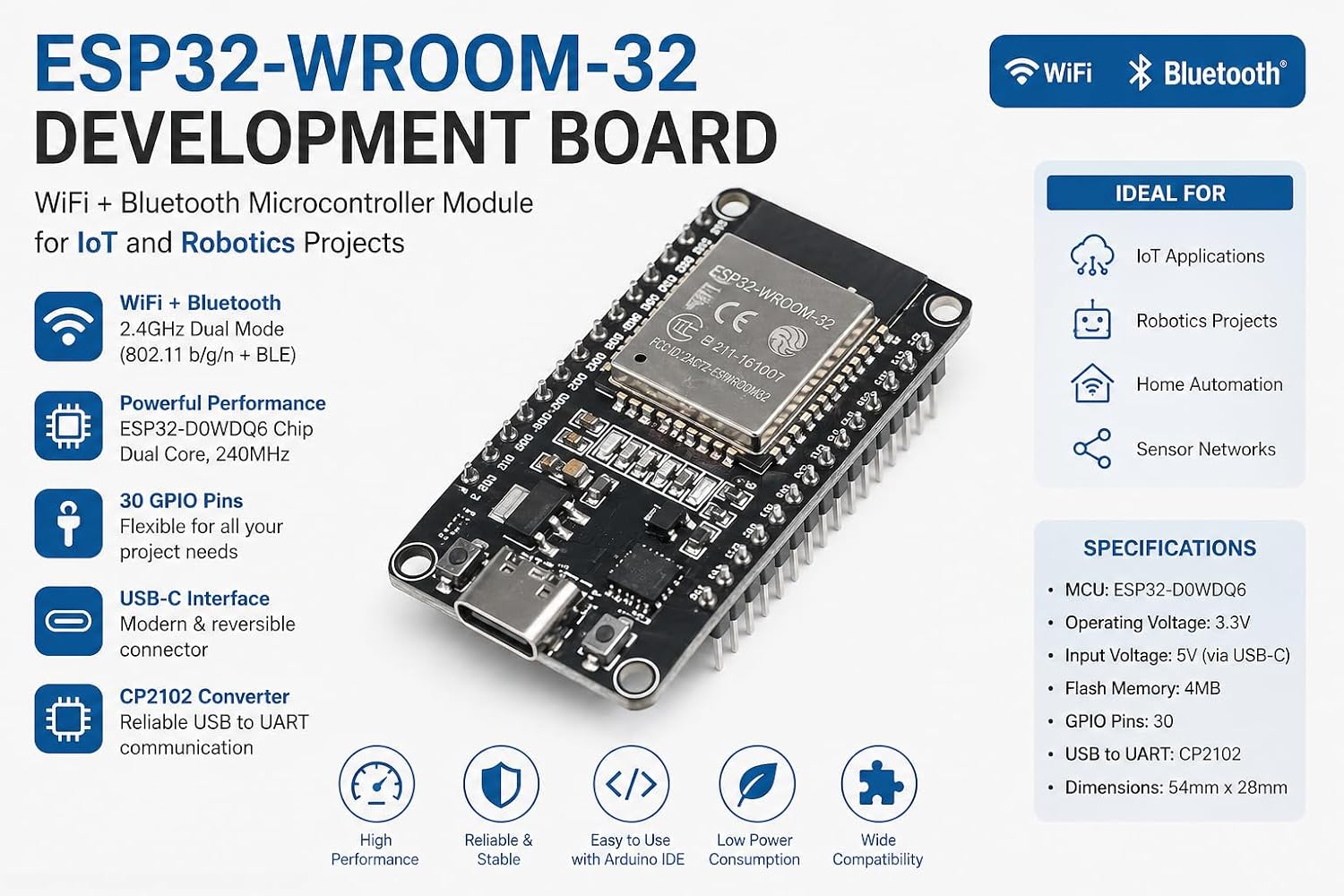
ESP32 Development Board USB-C
₹459
In stock
- ESP32: Powerful dual-core microcontroller with integrated Wi-Fi and Bluetooth connectivity for IoT, automation, robotics, and wireless control projects
- 30 GPIO PINS: Extensive pin configuration supporting ADC, DAC, PWM, SPI, I2C, and UART interfaces for versatile connectivity and sensor integration
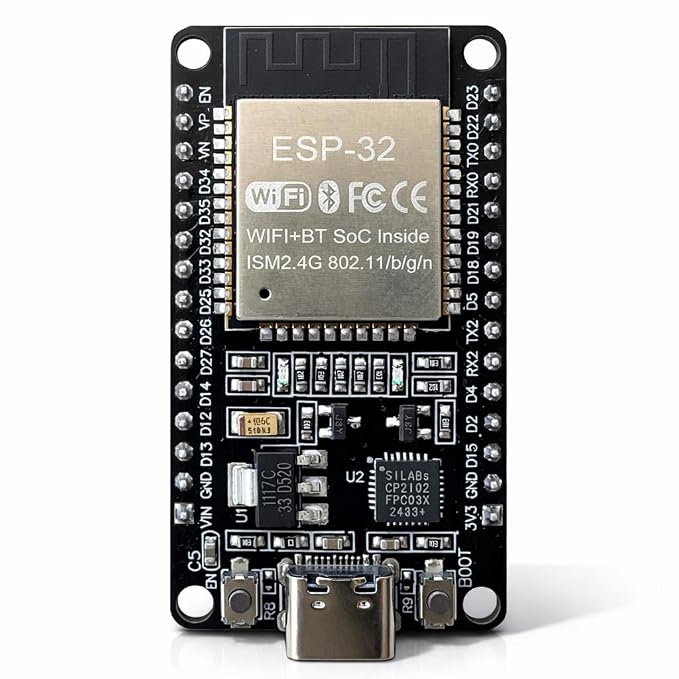
- USB-C INTERFACE: Modern USB Type-C port for convenient power supply and programming with CP2102 USB-to-UART converter for reliable communication
- DEVELOPMENT READY: Compatible with Arduino IDE, MicroPython, and ESP-IDF environments for rapid prototyping with onboard voltage regulator, EN and BOOT buttons
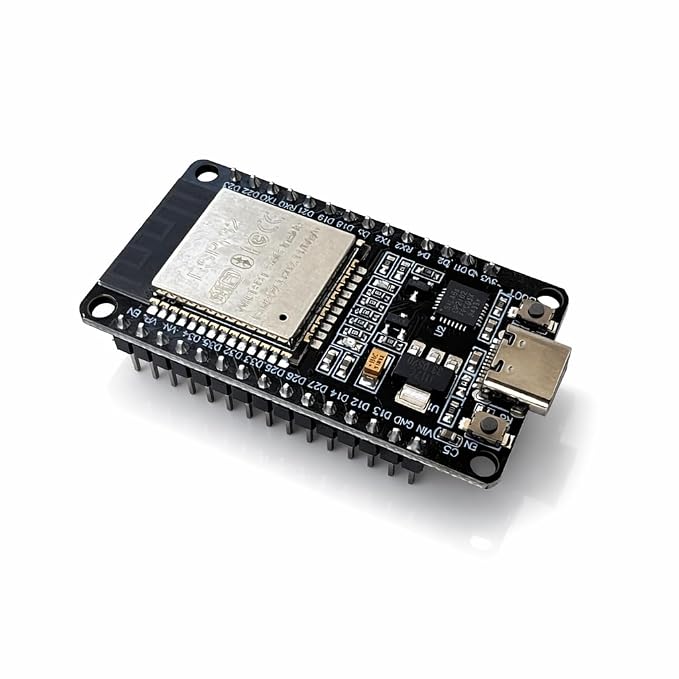
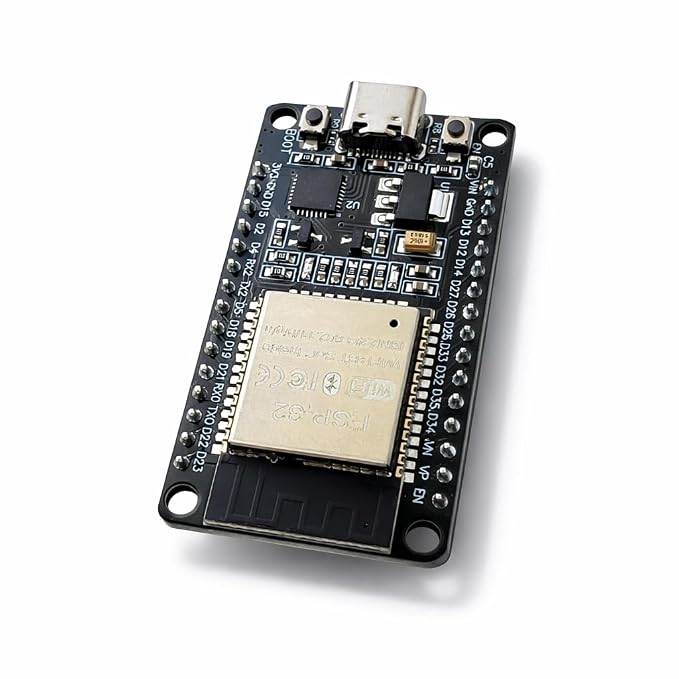
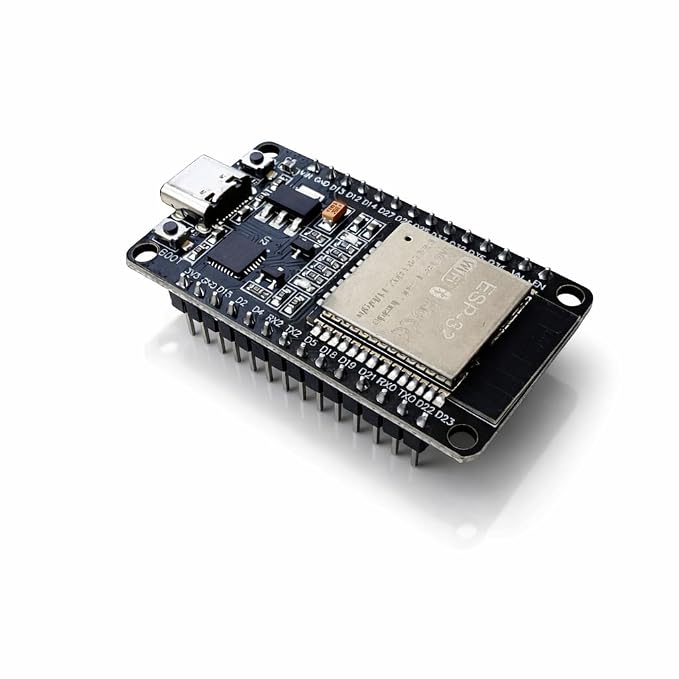
- COMPACT DESIGN: Development board features integrated antenna, status LEDs, and mounting holes for easy installation in various project enclosures
Description
The ESP32-USB-C Development Board is an versatile, low-power system-on-chip (SoC) microcontroller platform designed for smart automation, wireless sensor networks, edge AI node prototyping, and robotics. Upgraded with a USB Type-C port, it eliminates fragile micro-USB connectivity issues while providing stable power supply during Wi-Fi transmission bursts.
At its core lies the ESP32-D0WDQ6 dual-core microprocessor, operating at adjustable clock frequencies up to 240 MHz. The board integrates complete RF front-end circuitry including an onboard PCB antenna, power amplifier, low-noise receive amplifier, filters, and power management modules. Supporting Wi-Fi 802.11 b/g/n and Bluetooth v4.2 BR/EDR & BLE, developers can easily construct remote web servers, MQTT publish/subscribe nodes, or Bluetooth Low Energy peripheral controllers using the Arduino IDE, MicroPython, or ESP-IDF framework.
Technical Specifications
| Parameter | Technical Detail |
| Microcontroller Core | Espressif ESP32 (Tensilica Xtensa 32-bit LX6 Dual-Core) |
| Clock Speed | Up to 240 MHz (Performance score up to 600 DMIPS) |
| USB Interface | Modern USB Type-C (Power, Programming, and Serial Debugging) |
| USB-to-UART Bridge IC | Silicon Labs CP2102 / CH340 USB-Serial Converter |
| Wireless Protocols | Wi-Fi 802.11 b/g/n (up to 150 Mbps) + Bluetooth v4.2 BR/EDR & BLE |
| System Memory | 520 KB SRAM + 4 MB External SPI Flash Memory |
| Operating Supply Voltage | 5V DC via USB-C OR 5V–9V DC via VIN Pin |
| Logic I/O Voltage | 3.3V DC (Pins are NOT 5V tolerant) |
| GPIO Header Count | 30-Pin Dual Inline Package (DIP) Breadboard-Friendly Spacing |
| Peripheral Interfaces | 12-bit ADC (up to 18 channels), 8-bit DAC (2 ch), Touch Capacitive Sensors (10 ch), SPI (3), I2C (2), UART (3), PWM, CAN 2.0 |
| Power Consumption | Active: 80–240 mA | Light Sleep: ~0.8 mA | Deep Sleep: ~10 µA |
| Board Dimensions | ~51 mm × 28 mm |
Pinout & Control Layout (30-Pin Variant)
                       [ USB Type-C Connector ]
                      +------------------------+
              EN  [ ] |                        | [ ]  VP (GPIO 36)
      VN (GPIO 39)[ ] |                        | [ ]  GPIO 34
         GPIO 35  [ ] |                        | [ ]  GPIO 35
         GPIO 32  [ ] |                        | [ ]  GPIO 33
         GPIO 25  [ ] |    [ ESP32-WROOM-32 ]  | [ ]  GPIO 26
         GPIO 27  [ ] |                        | [ ]  GPIO 14
         GPIO 12  [ ] |                        | [ ]  GPIO 13
             GND  [ ] |                        | [ ]  GND
         GPIO 13  [ ] |  [EN]            [BOOT]| [ ]  VIN (+5V)
         GPIO 22  [ ] |                        | [ ]  GPIO 23
         GPIO 21  [ ] |                        | [ ]  TXD0 (GPIO 1)
         RXD0 (GPIO 3)[ ] |                    | [ ]  GPIO 22
         GPIO 19  [ ] |                        | [ ]  GPIO 18
         GPIO 5   [ ] |                        | [ ]  GPIO 17
         GPIO 16  [ ] |                        | [ ]  GPIO 4
         GPIO 0   [ ] |                        | [ ]  GPIO 2
                      +------------------------+
| Pin Group | Pin Names | Recommended Usage |
| Power Inputs | VIN, 3V3, GND | Supply regulated +5V to VIN, or +3.3V directly to 3V3 rail. |
| I2C Bus | GPIO 21 (SDA), GPIO 22 (SCL) | Connect external displays (OLED), RTCs, and multi-sensor modules. |
| SPI Bus | GPIO 23 (MOSI), GPIO 19 (MISO), GPIO 18 (SCK), GPIO 5 (CS) | Interface with high-speed SD card modules and TFT displays. |
| Analog Inputs | VP / VN (ADC1), GPIO 32-36 | Connect analog potentiometers and sensors. (Note: ADC2 unavailable when Wi-Fi is active). |
| Input-Only Pins | GPIO 34, 35, 36 (VP), 39 (VN) | Use strictly as digital/analog inputs (no internal pull-up/pull-down resistors). |
Arduino IDE Getting Started Example
C++
// ESP32 USB-C Wi-Fi Scanner Test
#include "WiFi.h"

void setup() {
  Serial.begin(115200);
  WiFi.mode(WIFI_STA);
  WiFi.disconnect();
  delay(100);
  Serial.println("ESP32-WROOM-32 USB-C Wi-Fi Initialized!");
}

void loop() {
  Serial.println("Scanning available networks...");
  int n = WiFi.scanNetworks();

  if (n == 0) {
    Serial.println("No networks found.");
  } else {
    Serial.print(n);
    Serial.println(" networks found:");
    for (int i = 0; i < n; ++i) {
      Serial.print(i + 1);
      Serial.print(": ");
      Serial.print(WiFi.SSID(i));
      Serial.print(" (");
      Serial.print(WiFi.RSSI(i));
      Serial.println(" dBm)");
      delay(10);
    }
  }
  Serial.println("----------------------------------");
  delay(5000);
}
Key Features & Highlights
-
Modern USB Type-C Interface: Replaces traditional micro-USB with a durable Type-C port for fast code upload and robust power delivery.
-
Dual-Core 240 MHz Power: Broad computing overhead for simultaneous network traffic handling and sensor processing.
-
Integrated Wi-Fi & Dual-Mode Bluetooth: Onboard antenna handles standard Wi-Fi station/AP modes alongside BLE beaconing and SPP connections.
-
Ultra-Low Power Deep Sleep: Consumes as little as 10 µA in deep sleep mode, making it ideal for battery and solar-powered field units.
-
Breadboard Compatible 30-Pin Form Factor: Standard 0.1″ pin header pitch fits directly onto standard solderless breadboards.
Common Applications
-
Smart home automation hubs, Wi-Fi relays, and remote appliance switches.
-
Wireless web-based environmental monitoring stations (temp, humidity, air quality).
-
Bluetooth Low Energy (BLE) asset trackers, beacons, and smart lock interfaces.
-
Industrial IoT gateways, MQTT telemetry clients, and cloud data loggers.
What’s Included in the Box
-
1 × ESP32-WROOM-32 Development Board (30-Pin USB-C Variant)
Why Buy From Aryabot?
-
100% Verified Hardware: Sourced with genuine Espressif ESP32 modules, stable USB-UART converters, and low-dropout (LDO) power regulators.
-
Tested & Benchmarked: Quality-checked for Wi-Fi signal strength, USB-C communication stability, and GPIO pin continuity prior to dispatch.
-
GST Invoice Provided: Tax-compliant B2B invoices generated for commercial deployments, educational institutions, and research labs.
-
Pan-India Express Dispatch: Fast order processing and direct fulfillment from our Noida facility.
Only logged in customers who have purchased this product may leave a review.


Reviews
There are no reviews yet.